

To the promotions committee:
This is my evaluation of Thales’ case for tenure. First a word about our connection. I have interacted with him several times, but always in a professional capacity, engaged in abstract thought while strolling the agora. I have never bathed at his house, nor held the head of the sacrificial heifer while he cut its throat, and the black blood drained away its life. I do not know him well. I believe, therefore, that I can be objective in my assessment.
To cut to the chase, Thales is widely regarded as the wisest man of his age, and the case for tenuring him is strong. Your department is lucky to have him. His most significant contribution is his argument that everything is ultimately made of water. It has made a big splash; in the most recent issue of Miletian Metaphysics well over half the articles are devoted to discussing it. Also worth mentioning is his treatment of the question which is older, night or day? Thales has argued, and I quote, “Night is older, by one day.” Now I myself received tenure for arguing the opposite, in a treatise that so far has over 200 citations on Google Scholar. I have always thought that the “night is older” view was completely indefensible, a sign of a mind deranged by the angry gods. Thales, to his credit, has convinced me that it needs to be taken seriously. His arguments are certainly the best I’ve seen, though they do suffer from serious flaws. My intuition tells me that night is by definition the darkness that follows day; an alleged “first night” is therefore metaphysically impossible. Probably, Thales is confusing epistemic with metaphysical possibility, a bit embarrassing this many years after Saul Kripke’s groundbreaking work. This is what happens when graduate programs abandon the core curriculum. (Note to administrators: philosophers always disagree, so this should not be taken as indicating doubts about his case.) His contributions are all the more impressive given that Thales came to philosophy late, after a career in politics—or else, he is proof that philosophical talent is in-born, and cannot be cultivated in the weak-minded, whatever the more progressive pedagogues in my profession would have you believe.
Some context for the administrators relying on this letter in their deliberations will not be out of place. You have noticed, when reading Thales’ CV, that he has published nothing. Please note that this is not unusual in his field. Many prominent philosophers have written nothing; some superstars have written only a few fragments. Philosophy is young, and does not yet fit the mold of either a “book” discipline or a “journal article” discipline. Think of it more as a “reputation” discipline: if a lot of philosophers think you’re great, that’s all it takes to be great. In fact, as things are, actually publishing something can diminish your standing in the profession, as your stellar “potentially” is transformed into a somewhat lackluster “actuality.” I expect philosophy will grow out of all this by 500 BCE or so, as more refereed journals are established, the publish-or-perish arms-race begins, and philosophers shift from addressing “big questions” to producing narrowly-argued small-moves in the literature, in a boring and repetitive style, that can make it past “referee 2.” Until then people like Thales need to be “grandfathered” in.
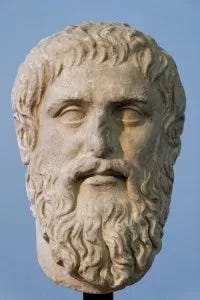
It may also be useful to categorize Thales’ research. Philosophers are standardly divided into three kinds, as follows:
some are called natural philosophers because they investigate nature; others are called moralists because they discuss morals; those who occupy themselves in verbal hairsplitting are called dialecticians.
Thales falls into the first group.
If I have one reservation about this case, it is that Thales’ extracurricular activities may interfere with his future research trajectory. His political punditry may have saved Miletus from the Persians, but it surely takes up a great deal of time and energy. His innovations in time-measurement have also been influential; using a 365-day calendar has become industry standard. But that work does not qualify as philosophy, and so cannot be counted in his favor here.
So much for my evaluation of Thales’ research. About his teaching and service I can write less, as I have not been in a position to observe either. I have heard that he is a loner, and may not be an asset to a graduate program that prizes a close and welcoming community. He is also known to report students to the discipline committee, when they email him begging that their B+s be upgraded to As; and to use LLMs to grade student work, while barring his teaching assistants from doing the same.
In your request letter you asked if Thales would receive promotion here. I expect it would be a “slam dunk” case, which is significant, as we are more in need of hairsplitting dialecticians than natural philosophers. I wouldn’t be surprised if he were soon inundated with outside offers. Retention in the face of richer schools’ outrageous salaries should not be hard, as he is known to be independently wealthy from speculating in the olive oil market.
You asked that I compare Thales to his peers, to aid in your evaluation. Is he among the top ten in his field, among whom I am unable to draw further distinctions? Does he remind me of myself, when I was younger, and less experienced? Do I expect the work in his file to be among the very small fraction of today’s philosophy that will still be read in two thousand years’ time? In fact in Thales’ case such comparisons are impossible, as he is the first philosopher.
If I can be of any more assistance, please don’t hesitate to contact me. I may be found, daily, praying for new ideas in the acropolis.1
An earlier version of this essay was published January, 2023.
Facts about Thales, and quotations, are from Lives of the Eminent Philosophers by Diogenes Laertius, translated by Pamela Mensch. Fabrications about Thales are my own.
Every discipline begins with someone who does not yet fit the discipline.
I'd imagine that if Thales applied for a position he was not too worried about financial compensation as he is already flush with cash thanks to his expert futures trading on olive presses, this should alleviate concerns about retention in the face of well-heeled head hunting.