

Bertrand Russell was once asked how he would justify his atheism, if he found himself before the pearly gates. “Not enough evidence, God!,” was his answer. It’s a common thought: if God exists, why hasn’t he compelled all but the most stiff-necked among us to believe in him, with more miracles, and more awesome revelations attesting to his mighty power? The is the “problem of divine hiddenness.”
One answer, discussed by Peter van Inwagen, denies that God wants us to believe he exists—or anyway, holds that it’s “at best misleading” to say that that’s what God wants. Hence, if God’s methods are poor methods for achieving that goal, that’s no indictment. Van Inwagen elaborates, with an analogy:
I want my wife to believe in my existence. Well if I say this I say something true, but it’s not a thing I would ever say outside a philosophical example. What I want is for my wife and me to stand in a certain complex set of relations that as a matter of fact have her believing in my existence as an essential component or logical consequence. If my marriage were destroyed...she’d probably still believe in my existence, but that by itself would be of no value to me. And God does not place any particular value on anyone’s believing in his existence—not simpliciter, not by itself. What he values is a complex of which belief in his existence is a logical consequence.
“Certain complex set of relations”—that’s a very van Inwagen phrase, and the complex in question is complex indeed, but it includes, and this is why the marriage example is so fitting, loving God. The kind of things God might do, to encourage us to love him, and believe in him “as a logical consequence,” are quite different from the kinds of things he might do, to secure belief without love.
An illustration of these points may be found in William Alston’s account of coming to the faith. Alston’s story, he notes, is
conspicuous for the absence of any presentation of arguments, any account of trains of reasoning leading up to an intellectual assent to this or that doctrine.
This, despite the fact that Alston is a professional philosopher, in whom one might expect “trains of reasoning” to be a core part of any change in view, especially one as momentous as this. Becoming Christian, for him, was not a movement of the mind. But what then was it, and what brought it about?
He finds it hard to articulate, blandly report that
Something happened, which I still find it difficult to put my finger on.
One preliminary was his acquiring the intellectual courage to dismiss skeptical debunkings of religious belief. The Freudians had said that religion was irrational wish-fulfillment, fit only for children. And Alston had been in this grip of this. But then he stepped back: wish-fulfillment is one possible explanation of religious belief, yes, but not the only one; such belief could also be a rational response to “a transcendent dimension of reality”; and why should he ignore that possibility “from fear of being branded as childish in some quarters?” Interestingly, he reports no further mulling this over, before psychoanalytic theories lost their power. He looked the adversary in the face, and the question “answered itself as soon as it was posed.”
But more important was his “opening himself up where he was closed.” This is a good image, but of what? Paul’s letter to the Romans talks of “the love of God” being “poured out in our hearts by the Holy Spirit,” and maybe that was what Alston “opened himself” to, but he could hardly have thought of it that way, before he believed. Instead he describes allowing himself to be “drawn into a community, into a way of life”: the practices of the church he was attending. No contradiction there, but it may still seem backwards: should not faith start, somehow, with God? Maybe yes and maybe no, but for Alston the “way of life” did produce actual belief:
I found God as a reality in my life through finding a community of faith and being drawn into it.
Alston uses another metaphor to explain this process: it was like “learning to hear things in music that one had been missing,” an interesting echo of something Roger White wrote about possible paths to faith. Attending church in the hope of coming to believe in God might seem an irrational way to influence your beliefs—even if you end up believing the truth. But there may be facts which are best, or even only, known by way of “going through the motions” appropriate to knowing them, before you have that knowledge. This may not work, and there may be nothing to know:
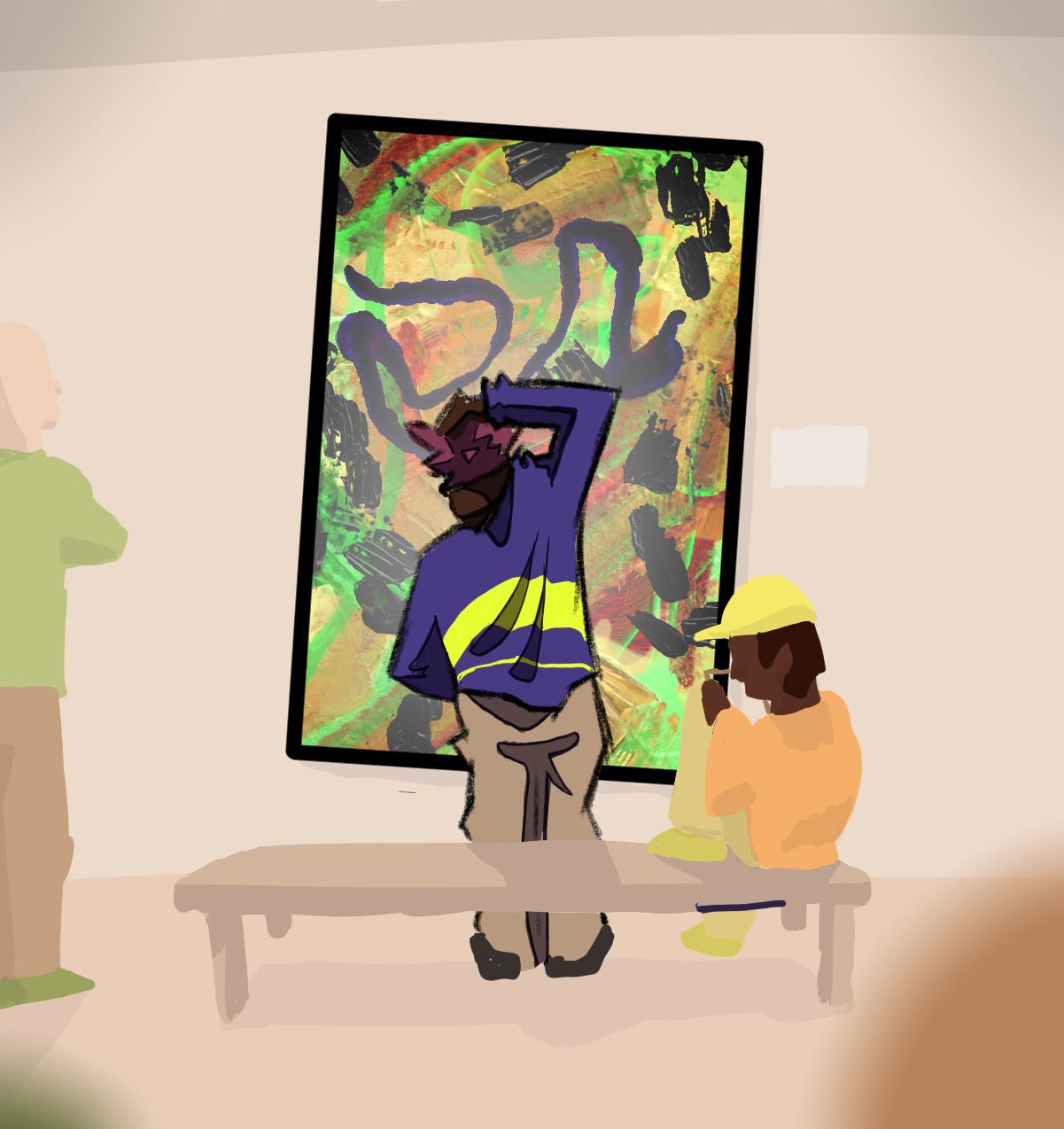
I don’t understand much about art, especially contemporary visual art...to me it mostly looks like a bunch of crap...[But] I have often wondered if there is something that I’m missing out on...I have tried to take on the artistic viewpoint in much the way that Pascal recommends attending Mass. I’ve gone to art galleries and stared at canvases covered with buckets of splattered paint, hoping to turn into one of those people who finds them profound.
Nothing happened in that case, but, Roger says, it was not a mistake to try. Maybe today’s art is bunk, but in other cases “utterly irresponsible belief manipulation can result in enlightenment.” Middle-aged and in his fifties, William Alston, through his church attendance but before his full conversion, now
found myself, incredibly, with a quite different orientation to the people around me. I began, for the first time in my life, to get a glimmer of what love means.
Returning to the hiddenness of God, maybe indirect routes to belief in him, of the sort Alston reports, are common and for some people even necessary, because they are so well-suited to produce belief in the company of love.
See also: On “Fear of Religion.”
Sources:
Peter van Inwagen, The Hiddenness of God.
William Alston, A Philosopher’s Way Back to the Faith.
Roger White, You just believe that because....
Is God or the Living Divine Reality really hidden?
http://beezone.com/baptism-of-immortal-happiness
http://beezone.com/adidagod-is-not-elsewhere.html
http://beezone.com/current/whenbodyfulllight.html
http://www.integralworld.net/reynolds17.html
On Fear
http://fearnomore.vision/the-vision-of-fear-no-more/feeling-beyond-fear