

[This continues an earlier essay, Book Review: Paradise Lost by John Milton.]
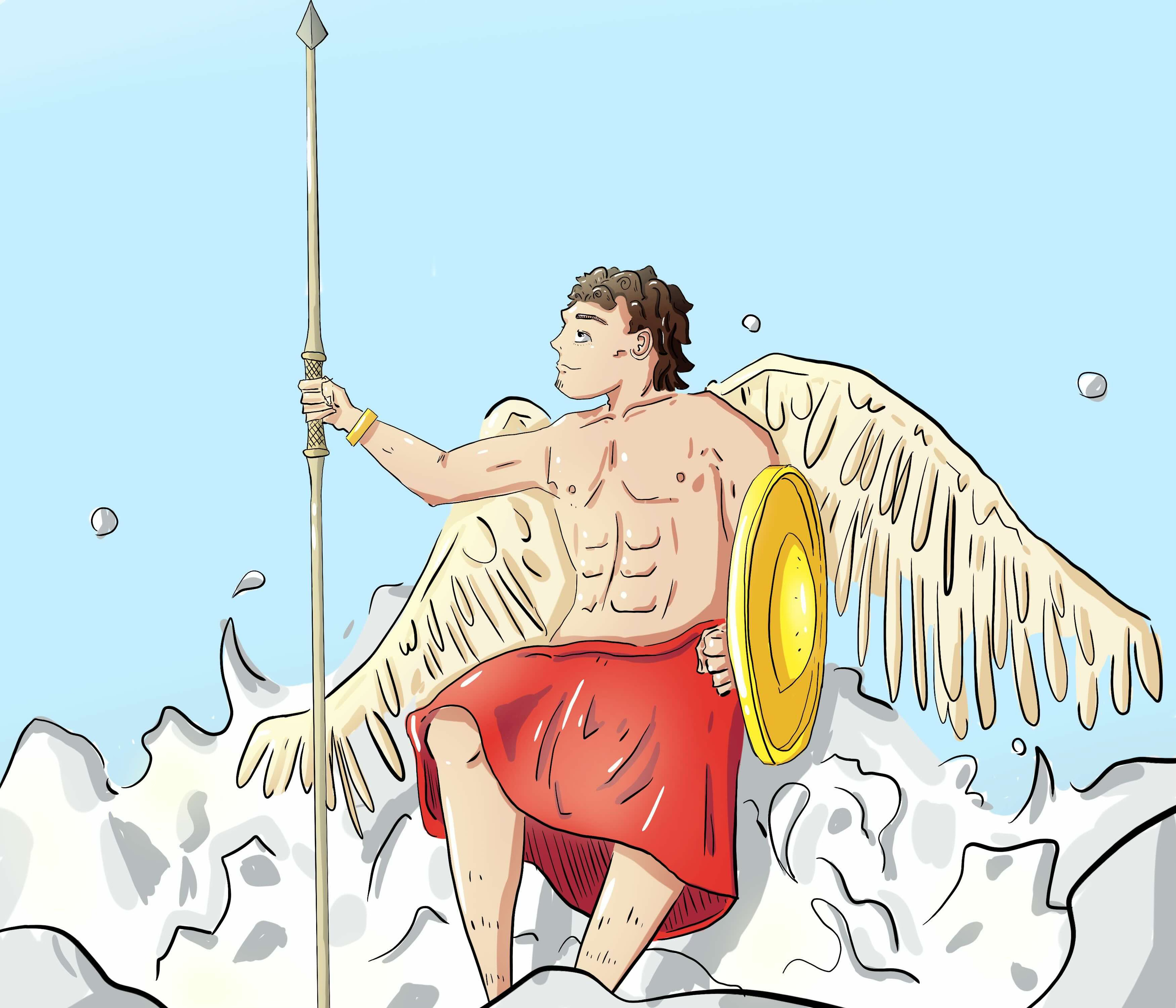
1. Adam asks Raphael, and you would too, admit it, about the sex lives of angels:
Love not the heavenly spirits, and how their love
Express they, by looks only, or do they mix
Irradiance, virtual or immediate touch?
Raphael answers that it’s pretty good, their “union” is “total”:
Whatever pure thou in the body enjoy’st
(And pure thou were created) we enjoy
In eminence, and obstacle find none
Of membrane, joint, or limb, exclusive bars;
Easier than air with air, if spirits embrace,
Total they mix, union of pure with pure
Desiring.
I’m no theologian, but this is curious, right? Sexual union belongs to the human form of life, for reasons I leave biologists to explain; but why should it belong to the life-form of the angels, who do not reproduce? (Or is this “union of pure with pure / desiring” not a form of sex?) More prosaically, is there an angelic dating scene, are angels permanently or serially monogamous, do they vary in their preferences for the poly lifestyle? In their conversation Raphael orates at length on whether the sun moves round the earth, or vice versa, but does not touch on these questions.
2. Those who find Milton’s Satan heroic must have closed the book too soon. In Book IX Satan is tormented, but nevertheless unsympathetic: in planning to seduce Eve, he does not
   hope to be myself less miserable
By what I seek, but others to make such
As I, though thereby worse to me redound:
For only in destroying I find ease
To my relentless thoughts.
If only careful reading can reveal the falseness in Satan’s early speeches, this one is, on its face, the speech of a villain.
3. “Milton intended us to admire Satan, in order to expose the sin inside ourselves”: this, Stanley Fish’s interpretation, is unpersuasive. But a different undermining of our reactions does happen, in the opening of Book IX. We’ve seen Satan’s rousing call to arms, and his army of evil assemble; we’ve been told of the great battle he waged in heaven; and they were thrilling. Now Milton says that humanity’s fall is a more appropriate subject for epic than great battles, and that his “argument” is “more heroic than the wrath / Of stern Achilles.” Again, war has been
   hitherto the only argument
Heroic deemed, chief mastery to dissect
With long and tedious havoc fabled knights
In battle feigned,
but true heroism happens elsewhere, and “the better fortitude / Of patience and heroic martyrdom” remains “unsung.”
4. Today, in academic journals and on social media, some “anti-natalists” argue against having children, on the ground that it exposes the child to harm, or risk of harm, without consent. A pre-echo of this argument appears in Adam’s (rhetorical) complaint to God, after his fall. Burdened with the prospect of death, and the certainty that future generations will blame him for their suffering—“what can I increase / ... but curses on my head?”—Adam asks,
Did I request thee, maker, from my clay
To mould me man, did I solicit thee
From darkness to promote me, or here place
In this delicious garden?
No, “my will / Concurred not to my being.” But then Adam convinces himself that this objection is unwarranted, by trying on the other role. He asks himself,
	what if thy son
Prove disobedient, and reproved, retort
Wherefore didst though beget me? I sought it not:
Wouldst thou admit for his contempt of thee
That proud excuse?
The implied answer is no: “I sought it [life] not” does not justify, or excuse, a child’s resentment, when his father punishes his disobedience. But this hardly engages the anti-natalist argument (not that one expects it to): deserved harm is the easy case, what needs addressing are unavoidable harms, or unjustified harms.
5. Timothy Steele rightly calls Milton “the patron saint” of enjambment:
Milton continually turns the line, and the energy of his poem derives in no small part from the way his long sentences ride across pentameter after pentameter.
Canonical examples include God hurling Satan down to hell:
   Him the Almighty Power
Hurl’d headlong flaming from th’ ethereal sky
With hideous ruin and combustion down
To bottomless perdition...
and Raphael’s more detailed description of the same event in Book VI:
Nine days they fell; confounded Chaos roar’d
And felt tenfold confusion in their fall
Through his wild anarchy, so huge a rout
Encumber’d him with ruin: hell at last
Yawning received them whole, and on them closed,
Hell their fit habitation fraught with fire
Unquenchable, the house of woe and pain.
But Steele’s observation, that the energy “derives in no small part” from the enjambment, underplays Milton’s achievement. If one enjambs by utterly ignoring where, in a phrase, the line ending falls, the most likely result is halting dislocation, or an awkward dissipation of energy. “Use enjambment” is not pure license, at least not for Milton; and to use it well may be harder than to end-stop every line.
6. Readers mistake what kind of poem Paradise Lost aims to be: that is C. S. Lewis’s diagnosis of the less than universal acclaim the poem meets. As a result, readers give up too early, abandoning their copy of the book with “a number of not very remarkable lines underscored with pencil in the first two pages, and all the rest of the book virgin.”1 Lewis admonishes us: we never should have “set out expecting ‘good lines,’” we never should have hoped for “little ebullient patches of delight”; for those, while appropriate in lyric, are detrimental to the project of epic. One might as well criticize Schindler’s List for not being as quotable as The Big Lebowski. But C. S. Lewis is wrong. Paradise Lost is full of ‘good lines.’ For premium subscribers, here are some of them.