

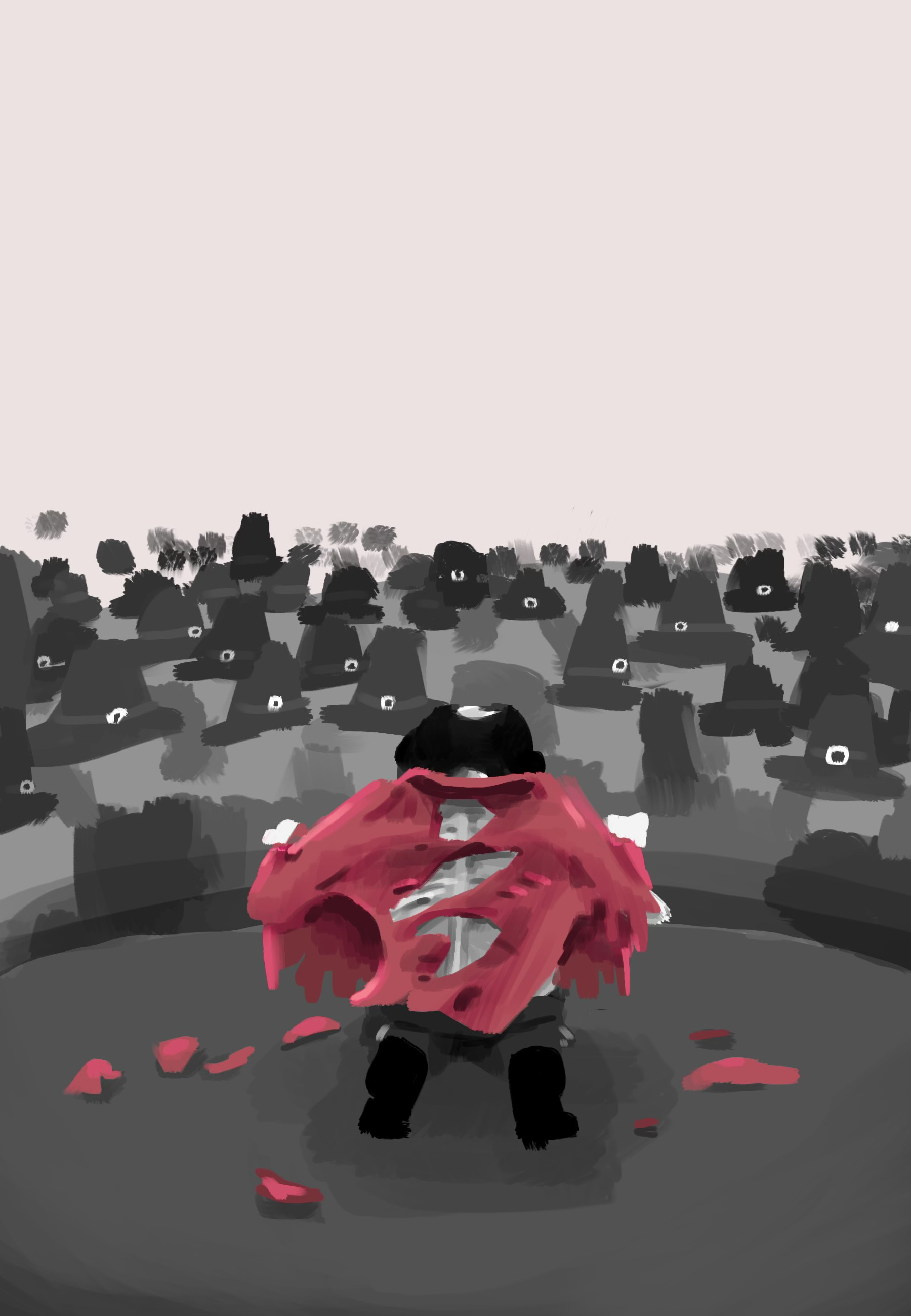
While in jail, the ghostbusters study the blueprints of the apartment building that, it will turn out, is a portal to a demon world, and they notice some unusual features: “cold-riveted girders...cores of pure selenium.” Bill Murray (er, Peter Venkman) says “So what? I guess they don’t make them like they used to!” and Dan Aykroyd, irritated as usual by Peter’s ignorance, shouts back
No! Nobody ever made them like this! The architect was either a certified genius or an authentic wacko!
It’s a little bit like that, reading The Scarlet Letter today.
The book ignores or deliberately flouts the rules and conventions we expect a novel to follow. Look:
1. The book has little by way of plot. It most resembles a short series of paintings. A scene is sketched; then details, physical, social, emotional and spiritual, are slowly and elaborately filled in, before the next scene is presented. In truth the novel is about four sentences long. Hester Prynne, bearer of the titular A, stands on a scaffold, suffering the townfolk’s judgment; then Arthur Dimmesdale, town pastor, secret partner in Hester’s sin, and father to her daughter Pearl, suffers under the evil medical care of Roger Chillingworth, who is Hester’s secret husband, long thought dead, and intent on extracting revenge. Seven years later, Dimmesdale and Hester meet in the forest, lose their nerve—or do they briefly find freedom?—and plan to flee New England together; and then the final scene, on the scaffold again, where Dimmesdale, trapped in New England, confesses to the town and dies.
Leonardo da Vinci, I’m told, achieved his effects through the careful application of endless and impossibly-thin layers of paint. Hawthorne’s style is something like that. One adjective, or modifying phrase, is never adequate to his meaning. Here is his description of Dimmesdale’s voice, as he preaches near the book’s end: