

Disneyland is criticized, by many, as an expression of the spirit of the 1950s. What appeared, and thought of itself, as a simple and wholesome goodness, they regard as an oppressive lie. But this mistakes both the time and place. The 50s were an “age of anxiety,” with the Cold War and the prospect of nuclear annihilation, and Disneyland was intended as a contrast, even an “antidote,” to an “edgy, restless, suspicious era.”
Also, give the guy a break. If anyone deserved to indulge a fantasy of “simple and wholesome goodness,” it was Walt Disney. As a child he had nothing, except an abusive father. At the age of nine, he was made to wake at 3:30am to deliver newspapers, and this story will break your heart:
Disney’s father didn’t believe children should have toys, but [Disney later recalled] “on nice mornings I used to come to houses with those big old porches and the kids would have left some of their toys out. I would find them and play with them there on the porch at four in the morning...Then I’d have to tear back to the route again.”
Again: this boy’s only chance to play with toys, was with other children’s toys, in secret, on stolen time, before sunrise.
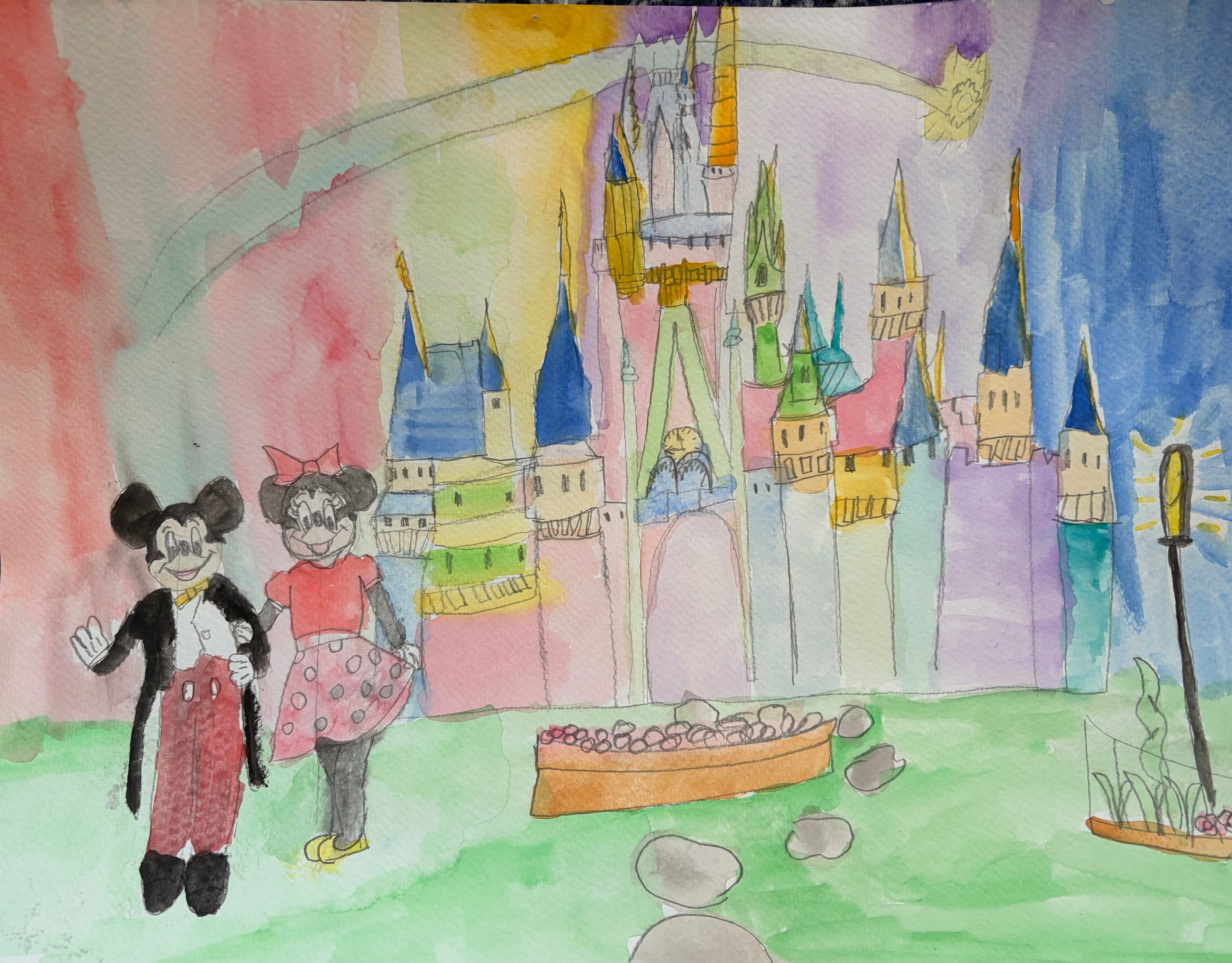
No one thought Disneyland would work. Had Walt Disney revolutionized animation, single-handedly creating the full-length animated motion picture, and made a bunch of people rich in the process? Yes! Had Snow White been called, before release, “Disney’s Folly,” and had the nay-sayers been proven wrong? That’s right! So when Disney pitched Disneyland, surely everyone thought, “damn it, he was right about the film thing, let’s trust him on this?” Not at all! A man invents electricity, yet all doubt his plans for a light bulb.
Experts in the (quote-unquote) “outdoor amusement industry” were sure Disneyland would fail, and they had reasons:
all the proven moneymakers are conspicuously missing...the Castle and Pirate Ship are cute but they aren’t rides so there is no economic reason to build them...Walt’s screwy ideas about cleanliness and great landscape maintenance are economic suicide. He will lose his shirt by over spending on things the customers never really notice.
Some responses seem so obviously stupid today one can’t but shake one’s head:
Tell your boss to save his money. Tell him to stick to what he knows and leave the amusement business to people who know it.
Here’s a funny story. Disney described his idea to a friend, at the as-yet undeveloped site, orange groves in sparsely-populated Orange County. The friend thought to himself, “I hardly knew how to tell him that, for once, he was making what would probably be the biggest, most ruinous mistake of his life.” Then Disney suggested buying up the nearby land: a chance to get in on the “ground floor.” “In just a couple of years,” Disney promised, that land would be
“hemmed with hotels and motels and restaurants and convention halls to accommodate the people who will come to spend their entire vacations here at my park.” It would “increase in value several hundred times” in the next five years.
The friend declined: “I knew he was wrong.” But he did not know this, because falsehoods cannot be known. Later he described his regrets: “I well remember that short walk across the dry, sandy road because that little stroll probably cost me about a million dollars a foot.”
What were all these people missing? When they imagined Disneyland, they could only see a defective amusement park. Judged in that category, it made every mistake: “rides would be subordinate to story and setting. Most shocking there were no thrill rides,” no roller coasters, no Ferris wheel and no tunnel of love. But Disney did not like amusement parks, which were dirty and dangerous, and attracted lowlifes and dropouts: of Coney Island he said “the whole thing is almost enough to destroy your faith in human nature.” Nor was he aiming to improve the amusement park: what he was building belonged to a category that as of yet had no instances. To call that category theme park is to repeat the mistake, of judging Disneyland by the Coney Islands of the world.
Kendall Walton, in Mimesis as Make-Believe, introduced to philosophers a notion, that the rest of you acquired as a child: that of a prop in a game of make-believe. The starting point is the imagination. You can imagine pink elephants, or going to the moon, idly, in a darkened room, alone. But often our imagings are attached more directly to real things. Looking at a cloud with a suggestive shape, I might imagine that it, the cloud itself, is a castle. The cloud has prompted me to an imagining, which has the cloud as its object. Still, the cloud is just a cloud, and, divine intentions aside, being an object of my imaginings is not what it is for. Yet what happened with the cloud, spontaneously, might be organized deliberately, in an environment built by man. We might create rules for imagining, and we might create things whose purpose is to be objects of those imaginings. Those things are then props in a game of make-believe.
The making of props is pre-historical: ancient Egyptian dolls, carved idols, and the like. And we never stopped. Indeed movies are props in games of make-believe. When you watch Snow White, you imagine, of your seeing the images on the screen, that they are your seeing a witch tempt a girl with a poison apple. However, in the theater, as in most places where one might engage with a prop, the props are limited in number. If the images on the screen are props, the creaky seats and the popcorn on the floor are not. Disney’s great advance was to make a place where everything was a prop. Disneyland was the first designed “immersive experience,” where each thing you saw, or touched, was meant to play a part in the imaginative game on offer. Not for nothing are those who design Disneyland called imagineers. This is why the apt precursor to Disneyland is not the amusement park, but—fittingly—the animated film. In the theater we engage with an imaginary world as spectators; in Disneyland we would do the same, but now as participants. This is also why money spent on the castle, the cleanliness, and the “landscape maintenance” was not wasted on irrelevancies, but well-spent on essentials. Even if no one would attend to every manicured blade of grass, too many of them out of place would break the spell, and ruin the game. “We took the most basic needs of guests and turned them into attractions,” one imagineer said. If you’re wondering how far this can be taken, visit the bathrooms in the Star Wars section of Disneyland today.
If nothing of its kind yet existed, how was Disney to find people with the skills and expertise needed to create it? (More on this, for premium subscribers, below the fold.)